Part 7 — The time-blindness trap (and why your brain isn’t lazy, it just doesn’t come with a reliable clock)
Dec 01, 2025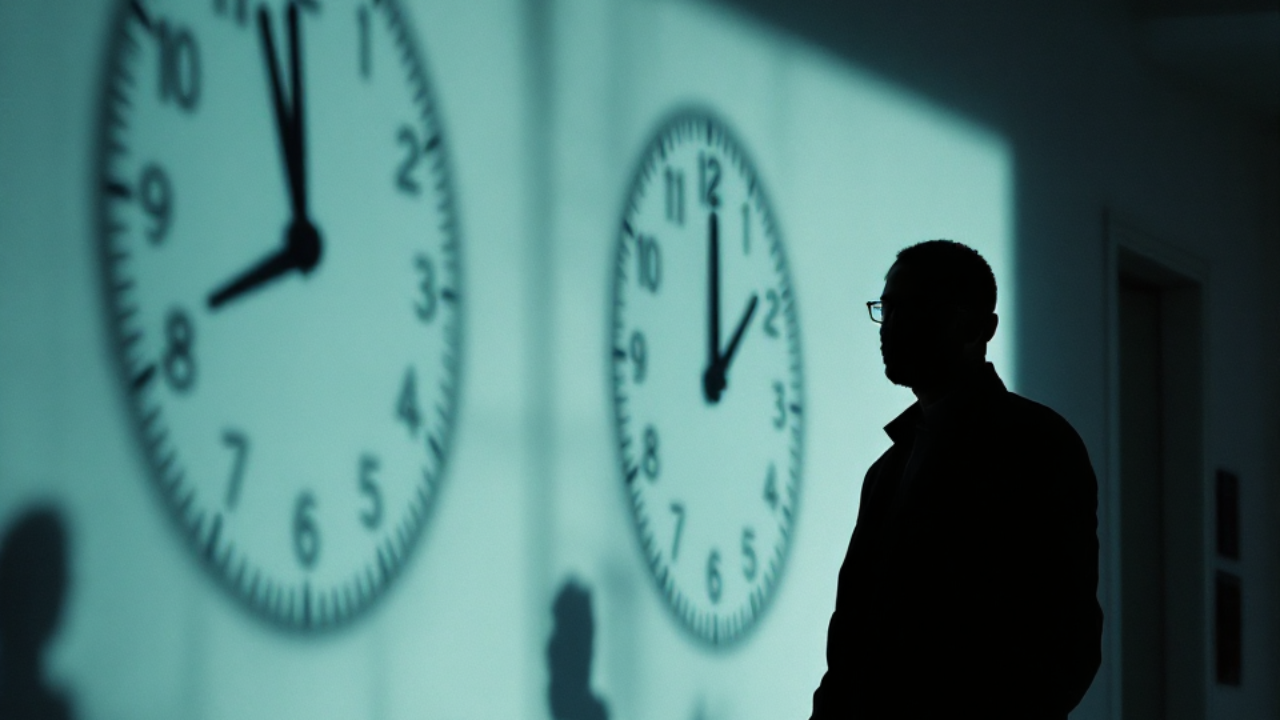
A strengths-led exploration by 🟠 the neurovision group
Introduction
This article is Part 7 of a 12-part series exploring the lived, internal experience of neurodivergence, the parts that rarely get talked about, yet shape our daily lives profoundly.
Time-blindness is one of the most defining, confusing, and often misunderstood experiences, particularly for ADHD and autistic people.
Time is not universal. Some of us live in a very different timezone.
Time-blindness is one of the most defining and misunderstood experiences in neurodivergent life.
Not because we don’t care.
Not because we’re irresponsible.
Not because we’re disorganised.
But because our brains relate to time the way some people relate to weather:
it arrives when it arrives, does what it wants, and cannot be reasoned with.
And when you finally understand this, so many “failures” from your past stop being moral judgments and start being neurological facts.
The “Now / Not Now” universe is real
For many ADHD and autistic brains, time comes in only two flavours:
Now.
Not now.
That’s it.
There is no “later”, no “in a bit”, no “I’ll start at 2pm”, no “I’ll just quickly do this”.
Time stretches, collapses, loops or vanishes altogether.
From the inside it feels like:
- living permanently in “now” or “not now”, there is no “soon”
- looking up and realising it’s suddenly tomorrow
- a 2 p.m. dentist appointment hijacking the entire day
- deadlines becoming real only when they’re actively on fire
- last week and last month feeling the same distance away
- the familiar guilt: “Everyone else seems to know how long things take…”
It isn’t laziness.
It isn’t disrespect.
It’s simply a brain that experiences time as impressionistic, not linear.
What’s really going on — our clocks run on feelings, not minutes
Our internal timing system is less “Swiss watch” and more “abstract art”.
- Dopamine decides when things feel urgent — not the calendar.
- Working memory is tiny, so if something isn’t right in front of us, it may as well not exist.
- Monotropism & hyperfocus can stop time altogether.
- Transitions cost triple the energy.
- Masking, sensory load, sleep, noise… all pull at the gears.
It’s not a broken clock.
It’s a nonlinear, intuitive, deeply creative relationship with time the world has never learned to accommodate.
The strengths nobody connects to time-blindness
The same “unreliable clock” is the reason we can:
- drop into flow so deep we create magic
- be completely present (mindfulness apps wish they were us)
- finish a week’s work in one glorious 3 a.m. surge
- follow the natural rhythm of a project instead of forcing an artificial timeline
- ignore “how long it should take” and focus on “what makes sense”
- deliver brilliance under pressure when the wave finally hits
We don’t manage time.
We surf it. And who doesn't love a surf?
And when the wave arrives, we ride it with terrifying beauty.
Mick Fanning and Kelly Slater have nothing on an ND brain in full-flow.
You don’t need a better personality, you need a better system
What actually works:
Externalise everything.
My brain is clever, but also the kind of creature that would leave itself at Tesco.
So: wall calendar, loud alarms, alerts, visual prompts everywhere.
Not shame, support.
Pair boring tasks with dopamine.
New playlist. New pen. New café table. Movement.
Neurochemistry first, productivity second.
Stop fighting the 2 p.m. black hole.
If an afternoon appointment ruins the morning, accept it.
Protect the morning for rest or light tasks.
Do the heavy lifting after.
Celebrate the last-minute rush.
It’s not “bad habits”.
It’s your operating system clicking into gear.
Rename the struggle.
Not “procrastination”.
But:
“Waiting for viable launch conditions.”
Instant dignity.
You’re not bad with time. You’re time-creative.
If you’ve ever lost entire afternoons to a “quick scroll”,
if five minutes is more of a philosophical concept than a measurement,
if you’ve been called flaky when you’re actually just running a different clock…
Please hear this:
You don’t need to fix yourself.
You need environments that support how your brain works.
Your brilliance doesn’t live in rigid schedules.
It lives in waves, rhythms, activation, urgency, novelty, flow.
When you stop fighting the clock and start dancing with it?
The world gets a version of you they’ve never seen before.
A toast to the time-travellers among us
Our community is full of people who:
- can write a 10,000-word report in one glorious 4 a.m. sprint
- yet cannot leave the house on time if their life depended on it
- schedule their whole day around one dentist appointment
- treat alarms like polite suggestions
- live on “ND Standard Time”, where five minutes = anywhere between now and the heat death of the universe
We don’t shame time-blindness here.
We recognise it.
We laugh with it.
We design around it.
Early arrivals are celebrated.
Late arrivals are normalised.
Hyperfocus arrivals are legendary.
Invitation — Come sit with your people
If you read this thinking,
“Five minutes is a vibe, not a duration,”
welcome home.
In the All Kinds of Minds community:
No clocks.
No judgement.
Low lighting.
Shared understanding.
Occasional memes about accidentally losing whole bank holidays.
We’ll save you a seat in whichever time zone you eventually show up in.
👉 Join All Kinds of Minds — free, gentle, grounded support whenever your brain remembers.
community.theneurovisiongroup.com
Reflections ✨
• Do you experience time as “now or not now”?
• What tasks disappear unless they’re urgent?
• How do appointments or deadlines shape your day?
• Which strengths become obvious when you follow your natural timing?
👉 Jump into All Kinds of Minds community – free, no clocks, maximum “wait, you too?”
Part 8 up next. Health as the missing puzzle piece
If there’s one truth I wish I’d known years ago, it’s this:
Neurodivergence doesn’t stop at the brain.
It lives in the body.
It shapes health.
It explains symptoms doctors often miss.